
Jacket Printing Methods Singapore: Embroidery, DTF, Heat Transfer or Silkscreen?
Choosing the wrong printing method for a jacket or windbreaker order is one of the most avoidable mistakes in Singapore’s custom apparel market — and one of the most common. A full-colour silkscreen print attempted on a smooth synthetic windbreaker produces inconsistent ink adhesion and fades within months. An embroidered design with fine text below 6mm in height loses all legibility once converted to thread. A heat transfer applied to a reversible windbreaker delaminates from the slippery inner fabric after a season of regular wear.
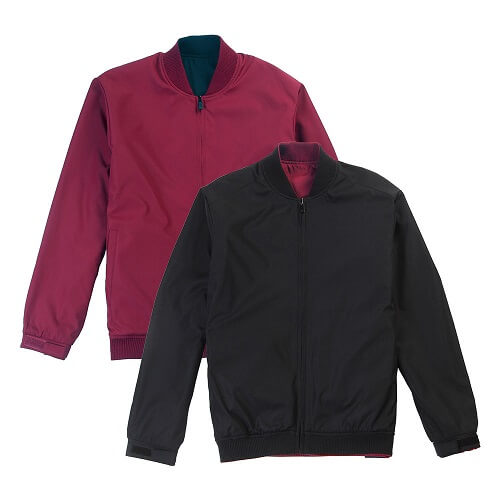
These problems share one cause: the printing method was chosen based on habit or price rather than on the specific fabric type, design complexity, and use case of the jacket being ordered. A windbreaker made from smooth high-density microfibre polyester has completely different customisation requirements from a cotton hoodie or a fleece corporate jacket — and the printing method that works brilliantly on one will underperform or fail on another.
This guide covers the four printing methods used for custom jacket Singapore and windbreaker orders in Singapore — embroidery, heat transfer printing, Direct-to-Film (DTF) printing, and silkscreen printing — with a precise explanation of how each method performs on jacket fabrics, which jacket types each method suits, and a decision matrix to match your specific order to the right technique.
The critical difference between jacket and t-shirt printing
Before comparing methods, there is one principle that applies specifically to jacket printing Singapore buyers need to understand: jacket fabrics behave fundamentally differently from cotton t-shirt fabrics under every customisation method.
Most windbreakers and custom windbreakers in Singapore are made from high-density polyester or microfibre — smooth, non-porous, synthetic fabrics. This surface does not absorb ink the way cotton does. Silkscreen ink that bonds cleanly with cotton fibres sits on top of a synthetic microfibre surface rather than penetrating it, producing a print that looks good initially but cracks and peels under repeated flexing and washing. This is why embroidery and heat transfer printing dominate the windbreaker customisation market in Singapore while silkscreen — the default method for t-shirts — is rarely the recommended choice for synthetic jacket fabrics.
Corporate jackets made from fleece, polyester blends, or bonded microfibre each have their own surface characteristics that affect print method performance. The rule is consistent: always align your customisation method to the specific fabric of your jacket model, not to the method you used for previous t-shirt or tote bag orders.
The four methods compared at a glance
| Criteria | Embroidery | Heat Transfer | DTF Printing | Silkscreen |
|---|---|---|---|---|
| How it works | Thread stitched directly into fabric | Design on vinyl/paper heat-pressed onto jacket | Film printed then bonded to fabric with adhesive powder under heat | Ink pushed through mesh stencil onto fabric |
| Best jacket types | All — especially windbreakers, corporate jackets, bomber jackets | Windbreakers, polyester jackets, bomber jackets | Windbreakers, all polyester/microfibre jackets | Cotton jackets, fleece — NOT recommended for synthetic windbreakers |
| Colour range | Limited by thread colours — no gradients | Full colour — gradients, multi-colour artwork | Unlimited — photographic, full colour, gradients | Up to 4 spot colours — no gradients |
| Design complexity | Simple to medium — logos, text, clean shapes | Medium to complex — multi-colour, detailed | Unlimited — any artwork complexity | Simple — bold flat logos in few colours |
| Durability on jackets | Exceptional — stitching outlasts the jacket | Good — can peel over time with heavy flexing | Very good — more durable than standard heat transfer | Poor on synthetics — cracks and peels without proper fabric adhesion |
| Cost at volume | Higher — digitisation fee plus stitch count | Moderate — no per-colour setup cost | Moderate — no per-colour cost, economical for complex designs | Economical at large volume for cotton jackets only |
| Lead time (Singapore) | 21–45 days from artwork approval | 21–45 days from artwork approval | 21–45 days from artwork approval | 5–7 working days — only viable on cotton jackets |
Embroidery — the premium standard for custom jackets Singapore
Embroidery is the most widely used and consistently recommended customisation method for custom windbreakers, corporate jackets, and bomber jackets in Singapore. A computer-controlled needle-and-thread machine stitches your design directly into the jacket fabric — the thread physically interlocks with the fibres and becomes structurally part of the garment. This produces a raised, three-dimensional result that looks and feels premium from the moment of first wear, and retains that quality through years of regular use and washing without peeling, fading, or cracking.
The reason embroidery is so consistently recommended for windbreakers specifically is that it bypasses the fabric adhesion problem that limits all ink-based methods on smooth synthetic surfaces. The needle passes through the fabric rather than depositing ink on top of it. Whether the windbreaker fabric is smooth high-density polyester, bonded microfibre double-layer, or nylon yarn dye — materials where ink-based methods produce inconsistent adhesion — embroidery produces equally clean and durable results across all of them.
Where embroidery is the clear choice for jacket printing Singapore orders
Corporate uniform jackets, staff windbreakers, and customised jacket Singapore orders where the jacket will be worn regularly as part of a company identity — the durability of embroidery matches the lifespan of a quality jacket. Recipients of custom jackets for company retreats, sports teams, and school CCAs will wear these jackets dozens or hundreds of times. Embroidery is the only method that remains crisp and professional through that usage volume.
Reversible windbreakers — one of the most popular jacket formats in Singapore’s corporate market — require embroidery rather than any ink-based method. Reversible windbreakers are double-layered, with two fabric faces. Ink-based methods applied to one face can cause bleed-through or delamination at the interlayer seam. Embroidery stitches through both layers simultaneously, locking the logo into the double-layer structure securely.
Design limitations to plan for
Embroidery requires a digitisation step — converting your artwork into a stitch programme — before production begins. Very fine text below approximately 6mm in height, thin lines below 1mm, and complex gradients do not reproduce well in thread form. The physical minimum stitch size limits fine detail. For logos that consist of clean shapes and bold text at a reasonable size — the majority of corporate and school logos — embroidery reproduces them cleanly and with a quality finish that no other method on a jacket matches. Always request a digitisation proof before confirming an embroidery order for custom printed jackets or custom windbreaker Singapore programmes.
Heat transfer printing — flexible and colour-rich for jacket artwork
Heat transfer printing uses a design printed onto vinyl or special transfer paper, which is then heat-pressed onto the jacket surface. The heat activates an adhesive layer on the transfer material that bonds it to the fabric. Heat transfer supports full-colour designs, complex artwork, gradients, and multi-colour logos — capabilities that embroidery’s thread limitations cannot replicate — making it the standard approach for jacket orders where the design is more graphically complex than a clean corporate logo.
For custom windbreakers in Singapore, heat transfer performs better than silkscreen because the transfer material provides its own adhesive substrate — it does not rely on the fabric surface absorbing ink the way silkscreen does. The transfer bonds to the smooth polyester surface through heat and pressure rather than through ink absorption, producing a more reliable result on synthetic jacket fabrics than silkscreen achieves. This is why heat transfer is used for jacket printing Singapore orders with event-specific full-colour artwork — team jersey-style designs, event logos with gradients, or campaign artwork with more than four colours.
The durability consideration
Heat transfer’s limitation on jackets is long-term durability under repeated flexing. Jackets are high-movement garments — they are zipped and unzipped, compressed into bags, worn over other layers, and stretched across shoulder movements repeatedly. Over time, standard heat transfer vinyl can develop micro-cracks at the design edges from this repeated flexing, particularly on larger design areas that span across seam lines or movement zones on the chest or back. For jackets that will be worn occasionally — event jackets, promotional giveaways, company trip outerwear — heat transfer provides excellent value at a lower cost than embroidery. For jackets intended for daily long-term wear, DTF printing provides meaningfully better durability at comparable cost.
Individual name personalisation on jackets
Heat transfer printing supports individual name personalisation on jackets at scale — each jacket in a batch can carry a different name or number from a master list, with the uniform design as the base. This capability is particularly valued for school CCA jackets, sports team outerwear, and corporate jackets for large teams where individual name identification is part of the brief for custom jacket Singapore orders.
DTF printing — the durable full-colour choice for synthetic jackets
Direct-to-Film (DTF) printing has rapidly become the preferred full-colour customisation method for synthetic jacket fabrics in Singapore’s apparel printing market. The process prints your design onto a film using CMYK inkjet inks, applies a hot-melt adhesive powder to the wet ink, cures the film, then heat-presses the finished transfer onto the jacket. The adhesive powder bonds the ink film into the fabric fibres more deeply than standard heat transfer vinyl, producing a result that is meaningfully more wash-resistant and flex-durable.
For branded tote bags and t-shirts, DTF has largely superseded standard heat transfer as the default full-colour printing method among Singapore’s quality-focused suppliers — and the same transition is occurring in jacket printing. MeowPrint, Innov Enterprise, and Trendink all explicitly offer DTF alongside embroidery as the two primary recommended methods for custom windbreaker Singapore orders. Standard heat transfer is increasingly positioned as the budget or urgent-turnaround alternative rather than the preferred full-colour method.
Why DTF outperforms heat transfer for custom jacket printing
The adhesive powder in the DTF process is activated by heat and cured to create a bond that penetrates slightly into the fabric surface rather than simply laminating onto it. The result is a transfer that flexes more naturally with the jacket fabric, maintaining design integrity through repeated movement, washing, and compression. For custom jackets that will be compressed into bags for overseas travel — one of the most common use cases for corporate windbreakers in Singapore — DTF transfers hold up significantly better than standard vinyl heat transfers under the mechanical stress of packing and unpacking.
When to specify DTF for jacket printing Singapore orders
Your design is full-colour, uses gradients, has more than four distinct colours, or includes photographic or illustrative artwork that embroidery cannot replicate in thread form. DTF handles any artwork complexity with no per-colour cost premium.
Your jacket will be used regularly and packed into bags repeatedly. The improved flex durability of DTF over standard heat transfer justifies the typically modest cost premium for corporate windbreakers intended for active ongoing use rather than occasional events.
Silkscreen printing — when it works and when it doesn’t for jackets
Silkscreen printing pushes ink through a mesh stencil directly onto the jacket fabric. It is the most cost-effective method at high volumes for simple flat-colour designs, and it performs extremely well on cotton and cotton-blend fabrics. The reason it features in this guide is specifically to address a common misunderstanding: silkscreen is routinely listed as a jacket printing option in Singapore, but it is only reliably suitable for cotton jackets and fleece. It is not recommended for synthetic microfibre windbreakers or polyester jackets — the fabric types that make up the majority of custom windbreaker Singapore orders.
The silkscreen on synthetic fabric problem
Smooth synthetic polyester and microfibre surfaces are non-porous — they do not absorb ink the way cotton does. Silkscreen ink deposited on a synthetic jacket surface sits on top of the fabric rather than bonding into the fibre structure. The print looks acceptable at point of production but begins to crack, peel, or wash off within months of regular jacket use — particularly at design edges and in high-flex zones around the chest and shoulders. This is why Singapore’s specialist jacket printing suppliers — MeowPrint, Innov Enterprise, MonsterPrints — consistently recommend embroidery or heat transfer/DTF for windbreakers and recommend silkscreen only for cotton fabrics.
When silkscreen is appropriate for jacket printing
Silkscreen works reliably for custom jacket printing when the fabric is 100% cotton or a high-cotton-blend fleece, the design is a flat logo in one to four spot colours, and the order volume makes the per-screen setup cost economical. Cotton hoodies and fleece jackets printed with a large back design or chest logo in two to three colours are a legitimate silkscreen application. The key question before specifying silkscreen for any jacket order is always: what is the fabric content? If the answer includes polyester, nylon, or microfibre as the primary fibre, choose embroidery or DTF instead.
Decision matrix — which method for which jacket order
Custom windbreaker, reversible windbreaker, or any synthetic microfibre jacket — simple logo in 1–4 colours
→ Embroidery. The most durable and professional result on synthetic jacket fabrics. Mandatory for reversible windbreakers. The default method for corporate uniform jackets and customised jacket Singapore team orders.
Custom windbreaker or bomber jacket — full colour design, gradients, or artwork with more than 4 colours
→ DTF printing. Best full-colour method for synthetic jacket fabrics. More durable than standard heat transfer under regular use and packing. No per-colour cost. 5–7 working day turnaround.
Jacket order with individual name personalisation — different name per jacket
→ Heat transfer or DTF (for the name component) + embroidery (for the main logo). Individual name text is applied via variable-data heat transfer or DTF. The company or team logo is embroidered as the primary branding element. The two methods are commonly combined on a single jacket for CCA, sports team, and corporate custom jacket Singapore programmes.
Cotton hoodie or fleece jacket — flat logo in 1–4 colours, large order volume
→ Silkscreen printing. The only context where silkscreen is the recommended jacket printing method. Cotton fabric absorbs silkscreen ink reliably. Most cost-effective per unit at 50+ pieces for simple flat-colour logo designs.
Premium corporate jacket or custom windbreaker Singapore client gift — quality is the priority
→ Embroidery. The raised, tactile, dimensional result of embroidery is the only method that communicates premium brand investment through physical quality. For jackets presented as corporate gifts or client appreciation items, embroidery is the specification that matches the context.
For a full guide to jacket and windbreaker types and which suits each Singapore occasion, see our windbreaker vs bomber jacket vs corporate jacket guide. View our full range of custom jackets and windbreakers Singapore or contact us with your artwork and jacket type for a method recommendation and quote within one business day.
Frequently asked questions
Not sure which printing method suits your jacket order?
Share your jacket type, fabric, design and quantity — we will recommend the right method and return a quote within one business day.
