86 eco friendly corporate gifts stocked in Singapore · branded from 200 pieces · 7 working days express on local stock
Eco friendly corporate gifts are the fastest growing request we take, and the hardest one to answer honestly. Nearly every supplier in Singapore will tell you an item is eco. Very few will tell you which kind of eco it is, and that is the only part a procurement team or an ESG report can actually use.
This page is the whole range we hold — 86 products from S$0.90 to S$12.55, median S$3.80 — grouped by what the material actually is rather than by how green it sounds. We supply and brand these items; we do not manufacture them, and we will tell you when an eco claim is thinner than it looks.
The short version. 37 of the 86 are made from recovered or residue material you can name on a report — RPET, recycled aluminium, sugarcane bagasse paper, Tyvek, rice husk, wheat straw. 48 are made from rapidly renewable material — bamboo, cork, jute, cotton. Those are different claims. The section below explains which one your audience will ask about.
Get a quote · WhatsApp us · MOQ 200 pieces · 21 to 45 days custom, 7 days express
The three eco claims, and which one you actually need
Treating “eco” as one category is why so much corporate gifting ends up embarrassing. There are three separate claims in this range, and they survive scrutiny to very different degrees.
1. Made from recovered material — the auditable claim
The item is manufactured from material that was already waste. RPET is post-consumer plastic bottles. Recycled aluminium is remelted scrap. Sugarcane bagasse paper is the fibre left after sugar extraction. Tyvek is recycled high density polyethylene. Rice husk and wheat straw are agricultural residue that would otherwise be burned. This is the only one of the three that a sustainability report can quantify, because there is a measurable percentage of recovered content and, where the mill is certified, a chain of custody behind it.
If your brief came from an ESG or procurement team, this is the group to shortlist. Start with the recycled notebook and pen set in sugarcane paper with RPET trim at S$12.55, the recycled aluminium water bottle with bamboo lid at S$3, or the RPET eco foldable bag at S$5.
2. Made from rapidly renewable material — the honest but softer claim
Bamboo, cork, jute and cotton are not recovered from waste. They are grown, and they regrow fast — moso bamboo is harvestable in three to five years against decades for hardwood, and cork is stripped from a living oak that is never felled. That is a real advantage over virgin plastic or tropical timber, and it is a weaker claim than recovered content. Say “renewable” here, not “recycled”, because they are not the same word and someone will check.
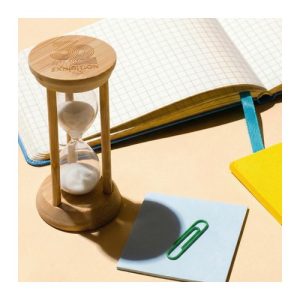
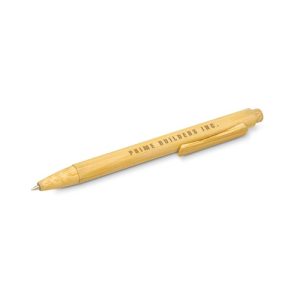
This is the largest group in the range and the most giftable. The bamboo pen in moso bamboo at S$1.56 is the volume workhorse; the A5 cork cover notebook at S$3 and the bamboo sand timer at S$5.02 sit at the gift end.
3. Reduces single-use by design — a behaviour claim, not a material one
A reusable cup, bottle or tote may be made of perfectly ordinary glass, aluminium, stainless or cotton. Its case rests on displacing disposables over its life, not on what it is made of. That argument is legitimate — it is the one we make for custom water bottles — but it depends entirely on the recipient actually using the thing. A tote that sits in a drawer has displaced nothing. Give this group to audiences who will carry it daily, and do not put a recovered content figure next to it.
What we will not claim. A cork base on a ceramic mug does not make the mug sustainable, and a jute carry handle does not make a Bluetooth speaker eco — we pulled one out of this category for exactly that reason. Where an item is in here on a reuse argument rather than a material one, the product page says so. If you need the stronger claim, our guide to avoiding greenwashing sets out what to ask a supplier for.
What we stock, by material
Counts below are live. Every item is branded in house and every price is per piece at the stated minimum.
Bamboo — 23 products, S$0.90 to S$10
The broadest group and the easiest sell, because bamboo photographs warm and takes a laser engrave cleanly. Coasters from S$0.90, ballpoints at S$1, the bamboo business card holder at S$2.50, the bamboo desk organiser with phone stand and pen pot at S$7.80, and the bamboo Bluetooth speaker at S$8. Several water bottles use a bamboo lid on an aluminium or borosilicate body — the borosilicate glass bottle with bamboo lid at S$4.90 is the pick there. Note that on those, the bamboo is trim; the sustainability argument is reuse.
Cork — 13 products, S$0.90 to S$12
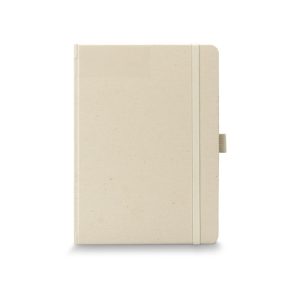
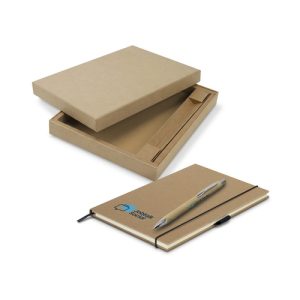
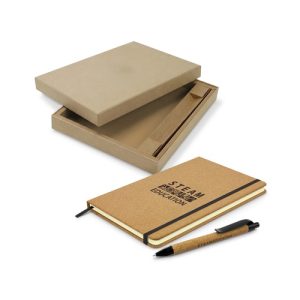
Cork is stripped from a living oak every nine years without felling it, which makes it the one renewable material with a genuinely good story to tell in a speech. It debosses beautifully and prints poorly, so keep artwork simple. The A5 cork notebook and pen gift set at S$2 is the best value gift in the range; the cork wireless charger pad at S$12 is the top of it.
Tyvek — 15 products, S$2 to S$8.70
Tyvek is spun recycled high density polyethylene. It looks and folds like paper, weighs almost nothing, and is waterproof and very hard to tear, which surprises people who assume a paper bag is flimsy. It is the sleeper of this range for roadshows: the eco Tyvek drawstring bag at S$7.80, the Tyvek crossbody bag at S$8.10 and the Tyvek eco cooler bag at S$6.90 all print edge to edge in full colour.
Sugarcane paper and RPET — the newest additions
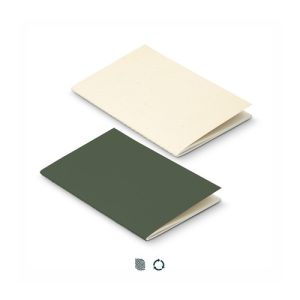
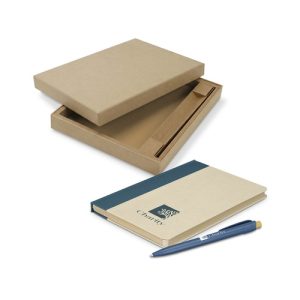
Two notebook and pen sets arrived this month, both on sugarcane bagasse paper: the kraft notebook and pen set at S$11.36, which reads natural and unbranded, and the recycled notebook and pen set with RPET spine trim at S$12.55, which is the one to pick when someone will ask a procurement question about materials. The RPET eco foldable bag at S$5 is the entry point for recovered plastic.
Jute — 5 products, S$5 to S$5.90
Jute is a bast fibre that grows in a hundred days and needs little irrigation. It is coarse, it carries weight, and it photographs as unmistakably natural, which is why it works for conference and festive gifting. The jute carry bag at S$5.90 is the standard; see the full jute bag range for shapes and laminated options.
Rice husk and wheat straw — agricultural residue
The quiet favourite. Both are byproducts that would otherwise be burned, and both mould into a dense material that feels closer to stone than plastic. The rice husk reusable coffee cup 350ml at S$5, the wheat straw 30cm ruler at S$2 and the wheat plates, three piece set at S$4.20 are all in stock.
Cotton and canvas — 7 products, S$2 to S$10
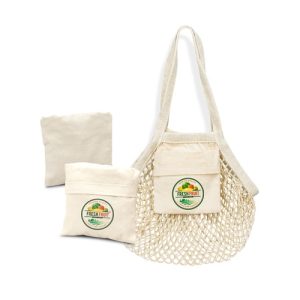
Cotton totes sit in this category on the reuse argument. They are the most requested eco gift in Singapore and the one most likely to end up unused, so specify a weight that survives — the foldable reusable bag range is where most of this demand lands, and it is the strongest performing eco page we have.
Materials compared at a glance
| Material | Claim type | Best decoration | Price band | Suits |
|---|
| Sugarcane bagasse paper | Recovered residue | Pad print, foil | S$11 to S$13 | Executive gifts, ESG launches |
| RPET | Recovered plastic | Full colour sublimation | S$5 to S$13 | Roadshows, mass door gifts |
| Recycled aluminium | Recovered metal | Laser engrave, wrap print | S$3 | Onboarding kits, volume |
| Tyvek | Recovered HDPE | Full colour edge to edge | S$2 to S$8.70 | Roadshows, wet weather events |
| Rice husk, wheat straw | Agricultural residue | Pad print | S$2 to S$5 | Office and kitchen gifting |
| Bamboo | Rapidly renewable | Laser engrave | S$0.90 to S$10 | Desk gifts, anything premium looking |
| Cork | Rapidly renewable | Deboss, laser | S$0.90 to S$12 | Notebooks, desk and tech |
| Jute | Rapidly renewable | Screen print | S$5 to S$5.90 | Conference bags, festive |
| Cotton canvas | Reduces single-use | Screen print | S$2 to S$10 | Retail style totes, daily carry |
What a certification actually proves
Four acronyms do most of the work in this market, and they prove narrower things than most gift catalogues imply. Worth knowing before you put one in a deck.
GRS, the Global Recycled Standard. Verifies recycled content percentage plus social and environmental criteria through the supply chain. The strongest of the four, and the one to ask for on RPET.
RCS, the Recycled Claim Standard. Verifies recycled content and chain of custody only — no social or chemical criteria. Useful, narrower than GRS, and often quoted as though it were the same thing.
FSC. Covers responsible forestry for paper and wood. It says the fibre was responsibly sourced. It does not say the paper is recycled, and the two are frequently conflated.
OEKO-TEX Standard 100. Tests the finished textile for harmful substances. It is a human safety certification, not an environmental one. A conventional cotton tote can hold it.
And one word to treat carefully: biodegradable. Most materials sold as biodegradable need industrial composting conditions to break down, and Singapore sends the overwhelming majority of its waste to incineration at Tuas rather than to composting. In practice a biodegradable giveaway here is incinerated like everything else, so the claim buys you very little. Durability and reuse are the honest levers in this market, which is why this range leans on recovered content and long life rather than on compostability.
If certification is a hard requirement, say so at quotation and we will come back only with items we can produce documentation for. We will also tell you where we cannot — several low cost items in this range are genuinely made of recovered material but ship without mill certificates, and that distinction matters if your claim is going in an annual report. The fabric and certification guide written for corporate uniforms goes deeper on GRS, RCS and OEKO-TEX than a gift page should.
Printing on eco materials — what works and what does not
Eco substrates are less forgiving than coated plastic, and the decoration decision is usually what separates a gift that looks considered from one that looks cheap.
Bamboo and wood take a laser engrave, not a print. Engraving burns a permanent dark mark into the grain and costs nothing in ink. Fine detail fills in and pale logos disappear, so simplify artwork to a solid mark and single line of text. Grain colour varies between pieces, which means engraved results vary slightly across a run — that is the material, not a defect.
Cork debosses, and resists ink. A blind deboss into cork looks far better than a print on it, and needs no colour match. If you must print, keep to one colour and a bold mark.
Tyvek and RPET are the full colour options. Both take edge to edge sublimation and full colour process, so if your artwork is a photograph or a complex gradient these are the only two materials here that will do it justice.
Recycled and bagasse paper print well but absorb. Colours sit a shade duller than on coated stock and fine reverse type can close up. Pad print and foil both work; expect a slightly softer result and design for it rather than fighting it.
Water based and soy inks are available on paper and textile items and are worth specifying when the gift is the centrepiece of a sustainability message. They cost a little more and the finish is marginally less glossy.
Choosing by occasion
D&D and annual dinner door gifts
High volume, low unit cost, one piece per guest. Bamboo ballpoints at S$1, bamboo coaster sets from S$0.90, or the wheat straw ruler at S$2. Budget S$1 to S$3 and keep decoration to a single engrave.
New hire and onboarding kits
This is where the eco choice does the most work, because the gift is the first physical thing a new employee gets from you. A notebook, a pen and a bottle. The kraft notebook and pen set at S$11.36 plus the recycled aluminium bottle at S$3 lands around S$15 a head.
Roadshows and exhibitions
Needs to be light to carry in bulk and to survive a downpour. Tyvek is the answer — the drawstring bag at S$7.80 or the crossbody at S$8.10 — with the RPET foldable bag at S$5 as the cheaper fill.
ESG report and sustainability campaign launches
The one occasion where the material claim will be read closely, possibly by a journalist. Stay in the recovered content group and be ready to produce documentation: the sugarcane and RPET notebook set at S$12.55 is the strongest item in the range for this, and it is worth paying the premium rather than defending a bamboo lid.
Client and festive gifting
Perceived value matters more than unit cost. Cork and bamboo photograph well and feel considered: the cork wireless charger pad at S$12, the bamboo sand timer at S$5.02, or the bamboo Bluetooth speaker at S$8.
Minimum order, lead time and express
Standard minimum across this category is 200 pieces, with branded production running 21 to 45 days for a custom run. Items held in local stock can be branded and delivered in 7 working days — look for the express badge on the product card. Some lines carry their own minimum: ask and we will tell you before you build a budget around it.
Tier pricing steps at 100, 250, 500 and 1,000 pieces on most items, so a run of 250 occasionally costs less in total than a run of 200 once setup is spread. If you are close to a break, ask us to price both.
The freight problem nobody puts in the brochure
An eco gift that flies in from a factory overseas has already spent most of its carbon advantage before it reaches your office. We are a Singapore supplier working with overseas factories, so this applies to us too, and it is the single most useful thing we can tell you about reducing the footprint of a gifting programme.
Three practical consequences. Weight and volume matter more than material. A dense ceramic or glass item shipped by air can carry a worse footprint than a heavier plastic item shipped by sea — the mode of transport usually outweighs the substrate. Order early and go by sea. The difference between a 21 day and a 45 day lead time is often the difference between air and sea freight, and sea is a fraction of the emissions. If sustainability is the point of the gift, build the calendar to allow it. Flat and nestable beats bulky. Foldable bags, flat packed boxes and nesting drinkware fit several times more units per carton, which cuts both freight cost and emissions on the same decision.
We will give you carton dimensions, units per carton and shipping weight on request for anything in this range, so you can compare two options on volume rather than on marketing copy.
Related reading
Longer guides where the detail belongs:
Frequently asked questions
What makes a corporate gift genuinely eco friendly?
One of three things, and they are not equivalent: it is made from recovered material such as RPET, recycled aluminium or sugarcane bagasse paper; it is made from a rapidly renewable material such as bamboo, cork or jute; or it replaces something disposable through daily reuse. The first is the only claim a sustainability report can quantify. Ask a supplier which of the three they mean, and if the answer is just the word eco, press further.
What is the minimum order for eco friendly corporate gifts in Singapore?
200 pieces across most of this category, with branded production in 21 to 45 days. Items held in local stock can be branded and delivered in 7 working days. A few lines carry their own minimum, so confirm at quotation before you commit a budget.
Is bamboo better than recycled plastic?
Not automatically. Bamboo is rapidly renewable and regrows in three to five years, which is a genuine advantage over virgin material. Recycled plastic diverts waste that already exists and carries a measurable recovered content percentage. If your claim has to withstand procurement or appear in a report, recovered content is the stronger position. If the gift needs to look and feel premium, bamboo usually wins.
Are biodegradable gifts a good choice in Singapore?
Rarely, and for a local reason. Most biodegradable materials need industrial composting to break down, and Singapore incinerates the overwhelming majority of its waste rather than composting it. A biodegradable giveaway here is incinerated like anything else. Durability, reuse and recovered content are the claims that hold up in this market.
Can you supply certification for recycled content?
For some items, yes — GRS or RCS documentation where the mill holds it. For others, genuinely not: several low cost items in this range are made from recovered material but ship without mill certificates. Tell us at quotation if certification is a hard requirement and we will only quote items we can document.
How do you brand bamboo and cork?
Bamboo is laser engraved, which burns a permanent mark into the grain and needs no ink. Cork is best blind debossed. Both favour a simple solid logo over fine detail, and engraved tone varies slightly across a run because the grain does.
Which eco gifts work for a D&D door gift on a tight budget?
Bamboo ballpoints at around S$1, bamboo coaster sets from S$0.90, or the wheat straw ruler at S$2. Budget S$1 to S$3 a head, single engrave, and order early enough to ship by sea.
Does shipping cancel out the environmental benefit?
It can, and it is the part most catalogues leave out. Mode of transport often outweighs material choice, so a dense item flown in can be worse than a heavier item shipped by sea. Order early enough for sea freight and favour flat packed or nestable items, which fit several times more units per carton.
Tell us the brief, not the product. If you say what the occasion is, who receives it, the budget per head and whether the claim needs documentation, we will come back with three or four options and the honest difference between them — including when the cheaper item is the better answer.
Get a free quote · WhatsApp 6589 8175 · MOQ 200 pieces · 7 working days express on local stock