Handover Box Design Guide: Materials, Locks & Features for Singapore Developers (2026)
Every Handover Box carries the same brief in Singapore: protect sensitive documents, hold keys and access cards, look premium enough to justify the developer’s brand, and survive years of use in a humid tropical home. But the materials, lock mechanisms, and interior fittings you choose will swing the unit cost by two or three times — and can either delight a buyer or disappoint them on move-in day. This guide walks through every material, feature, and finishing decision you will face when specifying a Singapore handover box in 2026.
Order from Aquaholic Gifts
Order property handover kits
PU leather folders, key holders and handover sets for developers and property agents. Custom production 21–45 days.


For bulk and corporate orders. Minimum order quantity and the full price list are on the property handover kit page.
Quick orientation: There are 4 material tiers, 3 lock types, and 5 interior fittings to think through. Most Singapore developers settle on PU leather + combination lock + EVA tray + hotstamped logo at a 300-piece MOQ.
Material tier 1 — PU leather (the workhorse)
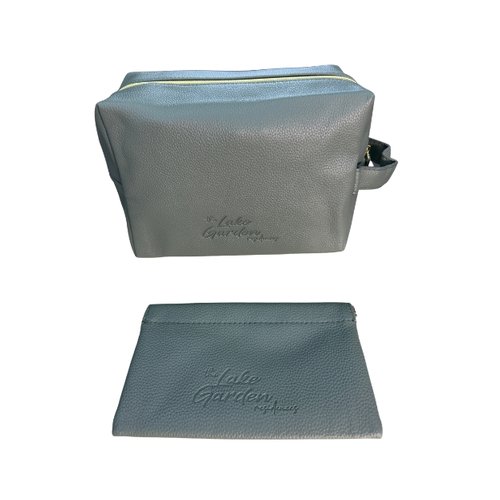
PU leather is where the vast majority of Singapore property handover kits land. It is colour-stable in humidity, accepts hotstamping and embossing beautifully, resists mildew better than real leather, and costs 40-60% less than genuine hide. For mass-market condos and executive condominiums at the 300-unit MOQ, PU is almost always the correct choice.
Within PU, there are three sub-grades worth knowing: standard saffiano PU (the most common, cross-hatch embossed finish), microfibre PU (higher-end, closer to the hand feel of real leather), and soft full-grain PU (most supple, best for luxury launches).
Material tier 2 — Genuine leather
Genuine leather is reserved for luxury launches, freehold districts, and GCB projects where unit selling prices justify a higher handover spend. The smell, the patina, the heft — these are tangible cues of quality that buyers notice the second they lift the box. Downsides are real: leather can spot in Singapore humidity if untreated, lead times lengthen by 2-3 weeks, and the MOQ cost per unit can double.
If you go leather, insist on vegetable-tanned full-grain from a reputable tannery, apply a protective water-repellent finish, and keep the colour in warm browns, burgundy, or black navy — these age best in the local climate.
Material tier 3 — Premium cardstock with leather accents
A hybrid option: rigid cardboard core wrapped in specialty paper, with small PU or leather accents on the handle, spine, or corner brackets. This delivers a boutique magazine-style feel at roughly half the cost of a full PU build. Works well for mass-market HDB BTO handovers where the developer wants something better than a plastic folder but cannot justify PU across thousands of units.
Material tier 4 — Wood and metal hybrid
Reserved for super-prime launches. Oak, walnut, or ash veneer lids with PU leather interiors. Beautiful but slow to produce (8-10 weeks from artwork to delivery), and the MOQ economics only make sense above S$80 unit cost.
Lock mechanisms: which one to spec
Option A — 3-digit combination lock
The most popular choice for Singapore handover boxes. Buyers set their own code, no physical key to lose, and the mechanism itself lasts a decade. Unit cost adds roughly S$2-3.
Option B — Key-and-barrel lock
Classic brass key-and-barrel is more elegant but risks the key being lost. Best used only on luxury tier boxes where buyers appreciate the tactile ritual.
Option C — Magnetic clasp (no lock)
If the box is a ceremonial welcome package rather than a long-term document safe, a hidden magnetic clasp keeps the profile clean and costs less. Skip this if your contents include strata title originals.
Interior fittings that make or break the unbox moment
The inside of the box is where the experience is actually won. Five fittings to consider:
- EVA foam tray — die-cut to the exact shape of your contents. Makes the box feel custom and expensive.
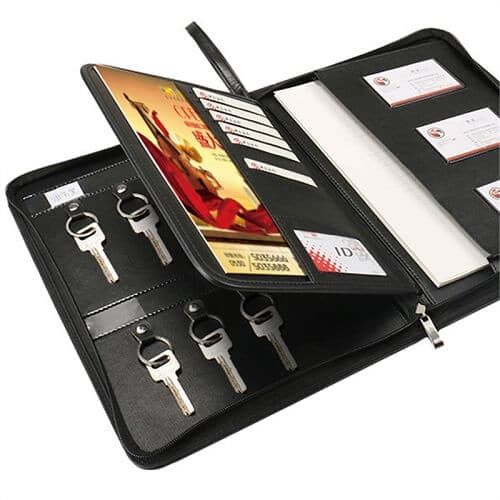
- Key tag tray with labelled hooks — the most-photographed feature on Singapore new-launch handover posts on social media.
- Card slots and document pocket — sized for Singapore NRIC, access cards, and strata title sleeves.
- Thumb drive slot — a small recessed EVA cut-out for a branded USB containing manuals and warranty files.
- Hinge type — metal concealed hinges outlast plastic hinges by years; insist on metal for any box expected to be reused.
Logo decoration methods ranked for handover kits
How you apply the developer logo and project name matters enormously in Singapore. The four main methods:
- Hotstamping (gold/silver foil) — most elegant, most common on PU handover boxes.
- Debossing (pressed into leather) — subtle luxury, best on genuine leather.
- Embossing (raised relief) — traditional, works on PU and leather alike.
- Silkscreen printing — cheapest, only acceptable if the developer’s brand palette is very specific and hot foil cannot match it.
Working with contents before locking the box spec
Do not design the box first and stuff contents in afterwards. Do it in reverse: finalise the eight-item contents checklist for Singapore property developers first, then brief the EVA tray cut and internal dimensions around what actually has to fit. Every Aquaholic handover project starts with a contents list because the tray shape dictates the box shape.
Minimum order quantity, pricing bands, and lead time
Aquaholic Gifts produces handover boxes from an MOQ of 300 pieces. At that quantity, indicative unit costs (artwork inclusive) are:
- PU leather with combination lock and EVA tray: S$22-32 per unit
- Microfibre PU with key lock and hotstamp: S$32-44 per unit
- Genuine leather with full custom tooling: S$55-85 per unit
- Wood veneer hybrid: S$80-130 per unit
Lead time is 4-6 weeks for PU builds and 6-10 weeks for leather or wood. For a time-sensitive launch, lock the contents list before engaging the factory — it is usually the biggest single source of schedule slip.
Frequently asked questions
Q: Can I mix materials on one Handover Box — for example leather cover with cardboard interior?
Yes. Hybrid builds are common and help hit a target unit cost. The most frequent hybrid is a PU leather exterior with a specialty paper interior lining and EVA tray.
Q: Which material holds up best in Singapore humidity?
Microfibre PU. It resists mildew, does not crack, and holds its colour. Genuine leather can be made to perform but only if it is vegetable-tanned and treated with a water repellent finish.
Q: How thick should the PU leather be for a premium feel?
1.0 mm to 1.4 mm backed PU with a rigid grey-board core gives the right weight and rigidity. Anything thinner feels cheap on contact.
Q: Are corner brackets necessary?
Metal corner brackets add a structured “document safe” look and protect against drop damage. They are optional on PU boxes but strongly recommended on leather and wood builds.
Get a custom Handover Box spec for your launch
Send us your project brief and our product designers will return material samples, lock options, and a unit-cost breakdown sized for your launch volume.