





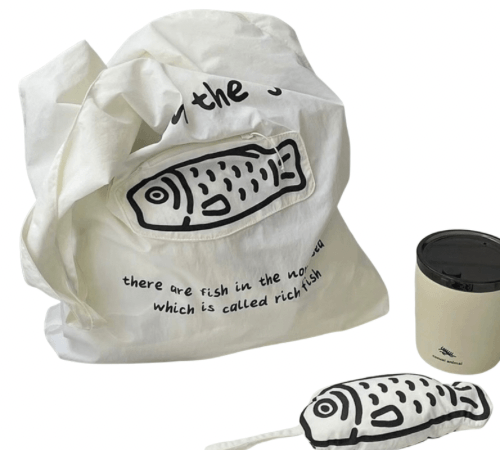
A gift-with-purchase foldable bag is one of the most cost-effective brand-building tools a retailer or FMCG brand can deploy in Singapore right now. Done well, it leaves your logo in a customer’s home — and on the MRT, at the hawker centre, and at the next supermarket run — for months or years after the promotion ends. Done poorly, it ends up in a drawer and gets forgotten by the following week. The difference almost always comes down to three decisions: the right bag size, the right material, and the right minimum-spend threshold. This guide covers all three, plus the mechanics of running a successful custom foldable shopping bags GWP campaign from brief to in-store launch.
Why Foldable Reusable Bags Outperform Other GWP Formats in Singapore Retail
Singapore’s plastic bag charge, which took effect at major supermarkets in 2023 and continues to expand to smaller retailers, has fundamentally changed consumer behaviour at the checkout. Shoppers who once reflexively grabbed a plastic bag now pause. A branded foldable reusable bag priced into a GWP mechanic lands in this moment as something genuinely useful — not just promotional clutter. Retailers who introduced foldable bag GWPs in the six months following the charge reported measurably higher repeat-visit rates among customers who redeemed the promotion, because the bag brought the brand back into the customer’s life every time it was used.
Compare this to a typical GWP such as a small cosmetic pouch or a branded keychain: useful once, then forgotten. A quality foldable shopping bag averages 50–100 uses per year for an active household. At 300 impressions per outing (a conservative estimate for the Orchard Road or Tampines Hub foot traffic environment), that is 15,000–30,000 brand impressions per bag per year. No other GWP format at a similar unit cost comes close.
Choosing the Right Bag for Your GWP Mechanic
Supermarket and Grocery Chains
The primary requirement is capacity. Shoppers who redeem a GWP bag at a supermarket checkout expect it to be large enough to actually carry their groceries home. This means a minimum open size of 38 × 42 cm with a bottom gusset of at least 8 cm — enough to carry 4–5 kg of groceries upright. Handle drop should be 30–36 cm to allow arm-carry without the bag knocking against the knee. Material-wise, RPET or 210D ripstop nylon are both wipe-clean, machine-washable, and durable enough for daily grocery use. Our full guide to choosing the right foldable bag dimensions breaks down every size tier with capacity benchmarks.
Health, Beauty, and Pharmacy Brands
For pharmacy and health-beauty GWP campaigns, a smaller format (28–32 cm) folds down to a compact pouch that fits inside a handbag. This is the GWP bag format best suited to minimum-spend thresholds of S$30–S$50, where you want the bag to feel like a reward but not dominate the counter display. Full-colour digital printing works well here because the print area is smaller and the brand colour accuracy matters in premium health and beauty contexts.
FMCG and Fast-Moving Consumer Goods Brands
FMCG GWP campaigns running across multiple retail touchpoints — supermarkets, convenience stores, and online — benefit from a medium-format bag (35 × 40 cm) that is versatile enough for both grocery and general shopping use. RPET is the preferred material for FMCG brands that want to lead with eco credentials, as the bag can be certified under the Global Recycled Standard and carry a GRS certification mark on the hang-tag. If your brand has an active ESG or sustainability programme, our guide on RPET recycle bags for sustainable brand campaigns covers how to align your GWP bag procurement with formal sustainability reporting requirements.
Setting the Minimum-Spend Threshold
The minimum-spend threshold determines whether your GWP bag feels like an achievable reward or an unreachable one. Set it too low and you erode margin without meaningfully lifting basket size. Set it too high and redemption rates collapse. Singapore retail data suggests the optimal threshold for a foldable bag GWP sits at 1.2–1.5× the average transaction value of your store or category.
Minimum-Spend Benchmarks by Retail Category (Singapore)
| Retail Category | Avg Transaction Value | Suggested GWP Threshold | Expected Uplift |
|---|---|---|---|
| Supermarket | S$40–S$60 | S$60–S$80 | 15–25% basket size |
| Pharmacy / Health | S$25–S$40 | S$35–S$50 | 10–20% basket size |
| Fashion / Lifestyle Retail | S$80–S$150 | S$120–S$180 | 20–30% basket size |
| FMCG (multi-pack promotion) | S$15–S$30 | S$25–S$40 | 10–15% volume uplift |
POS Display: Making the Bag Visible at the Point of Decision
A GWP bag that sits behind the counter in a cardboard box delivers a fraction of the conversion rate of a bag displayed openly at the point of purchase. The most effective POS configurations for Singapore retail environments are:
Counter display (open): One bag unfolded and hanging from a hook or small stand directly at the cash register. Shoppers see the bag, reach the threshold mentally before reaching the checkout, and make purchasing decisions to hit the minimum spend. This is the single highest-converting display format.
Aisle header card: A printed card at the end of the promotional aisle showing the bag and the minimum-spend mechanic. Drives basket-building behaviour while the customer is still shopping.
Shelf wobbler: A small display card attached to the shelf edge in the highest-margin category. Particularly effective for FMCG brands running category-specific promotions (e.g., “Spend S$30 on personal care items this week and receive a free reusable bag”).
Branding Your GWP Foldable Shopping Bag
The print panel on a foldable shopping bag is valuable real estate. Resist the temptation to fill every centimetre with product information or promotional copy that will be outdated the moment the campaign ends. The most durable branding approach — literally and figuratively — is a large, bold logo with a tagline or brand colour block that works as a standalone visual for years beyond the promotion.
Silkscreen printing is the most cost-effective method for one- or two-colour logos at high volume (500+ pcs). For full-colour photographic prints or gradients — common in premium beauty and fashion GWP campaigns — digital or heat-transfer printing delivers better colour fidelity. If your campaign is timed around festive seasons, our guide to custom reusable bags for CNY and seasonal campaigns covers how to adapt your print brief for limited-edition seasonal colourways without creating a separate bag SKU.
Stock Management: Avoiding the Two GWP Campaign Killers
The two most common execution failures in retail GWP bag campaigns are running out of stock mid-campaign and having large quantities of bags left over at campaign close. Both are avoidable with realistic redemption modelling.
Redemption rate benchmarks: For an in-store GWP with good POS visibility, expect 8–15% of all qualifying transactions to redeem. Online GWP campaigns (e-commerce checkout) typically run at 15–25% redemption due to the higher intent of online shoppers. Use these figures to calculate your initial production order: (estimated qualifying transactions per week × campaign duration in weeks × redemption rate) + 15% buffer stock.
At MOQ 300 pcs and a four-week campaign in a single-outlet environment, 300 pcs is typically sufficient. For multi-outlet campaigns across 10+ stores, calculate per-store and then consolidate to avoid over-ordering at the central warehouse.
Frequently Asked Questions
What is the minimum order quantity for a retail GWP foldable bag?
The default MOQ is 300 pcs. For multi-outlet campaigns, the same MOQ applies per style — but you can split delivery across outlet locations. Campaigns ordering 1,000 pcs or more typically attract a 10–15% unit price discount.
Can I add a campaign-specific message to the bag without it looking dated?
Yes — but structure it carefully. Keep the primary print panel to your evergreen branding. Use a hang-tag or a secondary print on the internal pocket or handle strap for campaign-specific copy. That way the bag remains usable and on-brand long after the promotion ends.
How long does production take for a custom GWP foldable bag?
Standard lead time is 14–21 working days from artwork approval. Allow an additional 5–7 days if you require a pre-production physical sample. Plan your campaign launch date backwards from your in-store date and add a 5-day buffer for delivery and in-store merchandising.
Can foldable GWP bags be used for both in-store and online orders?
Yes. For online GWP, the bag is folded flat and placed inside the order box. This works best with nylon or RPET foldables that compress to a small pouch, rather than non-woven variants that fold flat but take up more space in the parcel.
Plan Your GWP Foldable Bag Campaign
Aquaholic Gifts supplies custom foldable shopping bags for Singapore’s leading supermarkets, FMCG brands, and retailers. From brief to delivery in 14–21 working days. MOQ from 300 pcs. Request a quote and free sample today.
